Japanese apartment listings don't tell you what the humidity feels like in August. They don't mention that the "cozy" ground-floor unit turns into a mold farm in July. They don't warn you that the beautiful south-facing balcony that gets gorgeous morning light also turns your living room into a greenhouse at 3 PM. This guide fills in the gaps that Suumo and Homes.co.jp leave out.
South-Facing Balconies: Essential, Not Optional
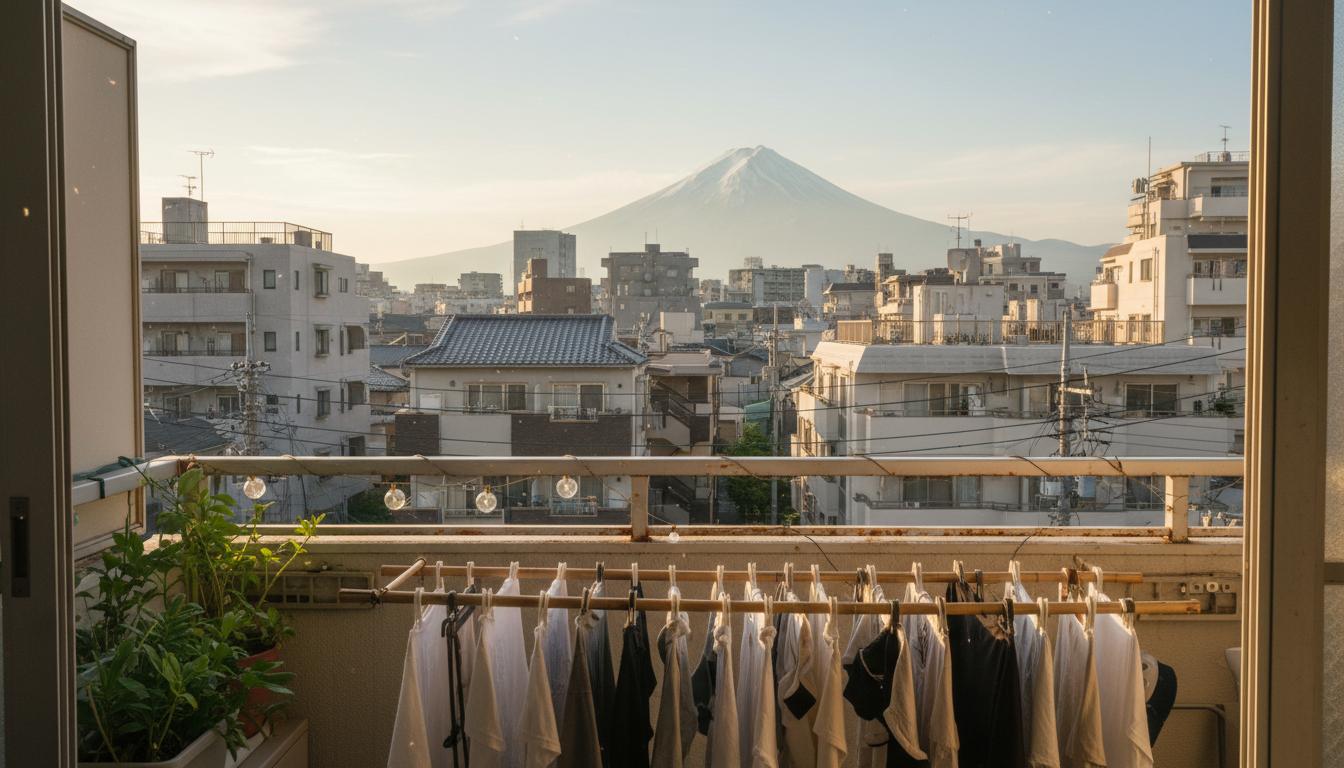
In Japan, south-facing isn't a nice-to-have. It's a quality-of-life necessity. Here's why: you'll be drying laundry outside. Almost no Japanese apartments have dryers — the electricity cost is too high, and most units don't have the ventilation for it. You'll hang your clothes on the balcony railing or a drying rack, and they need sun and breeze to dry.
In Tokyo's humid summer, clothes hung on a north-facing balcony can take two days to dry and still smell musty. On a south-facing balcony, they'll dry in 4–6 hours. In winter, the difference is even more stark — short daylight hours mean you need every minute of sun you can get.
But there's a trade-off. South-facing units are hotter in summer. That gorgeous sun that dries your laundry also heats your living room to 32°C by mid-afternoon. You'll need good curtains — blackout curtains, ideally — and you'll run the AC more. Some buildings have balconies with overhangs that provide shade while still allowing airflow. These are the best of both worlds.
On Suumo, south-facing is marked as 南向き (south-facing). On Homes, it's usually in the description text. Filter for it. If you can't find south-facing, southwest (西南) is the next best option. Avoid north-facing unless the rent discount is substantial and you have a indoor drying alternative.
Insulation Reality: Japanese Walls Are Thin
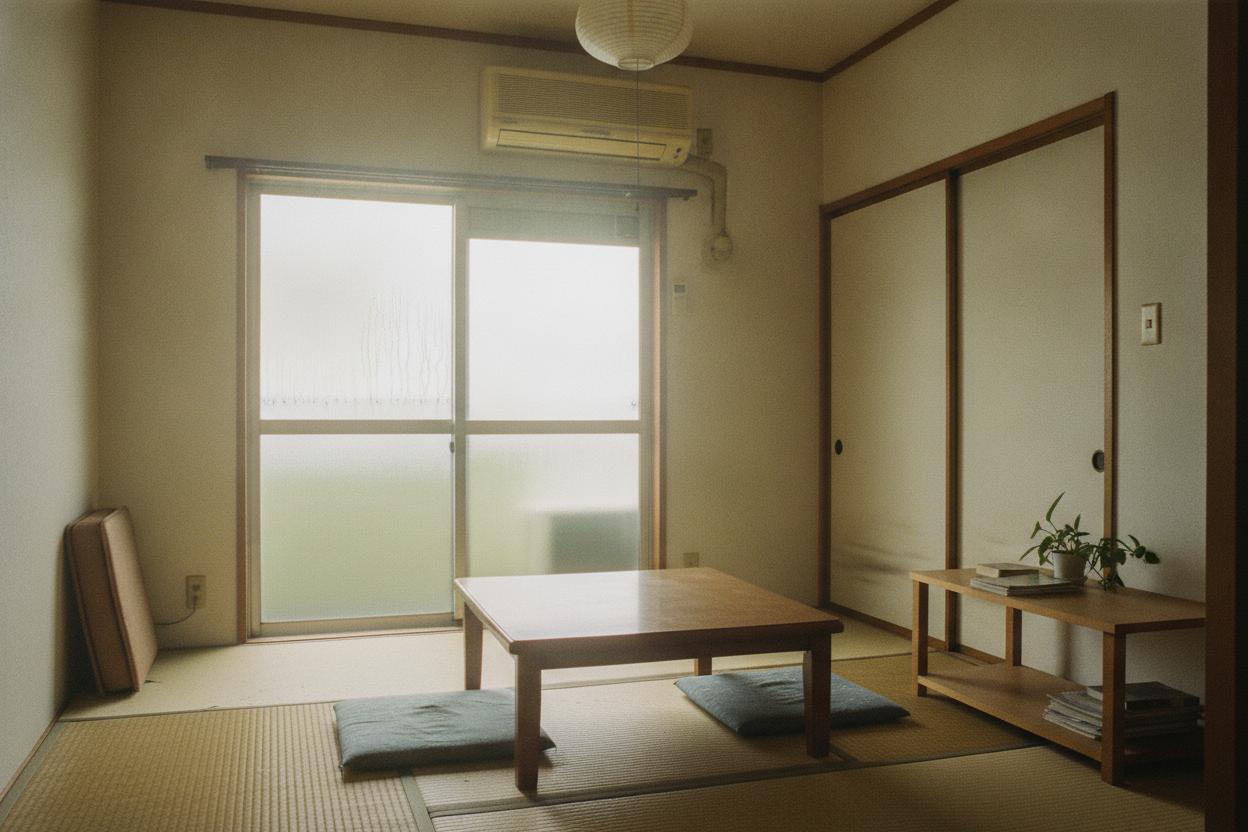
Here's something we wish someone had told us: most Japanese apartments have the insulation equivalent of a cardboard box wrapped in plastic. The walls are thin. Single-pane windows are standard in buildings older than 10 years. There's no central heating. The climate outside walks through your walls like they're not there.
We learned this in our first Tokyo apartment, a 1988 building in Setagaya. In January, the indoor temperature was 9°C in the morning. We could see our breath. The AC's heat mode ran constantly and barely kept the room at 16°C. Our January electricity bill was ¥18,000 — for a 1K unit smaller than a hotel room.
The building standards changed in 2015. Newer apartments labeled with 高断熱 (high insulation) and 高気密 (high airtightness) are dramatically better. The walls are thicker, packed with insulation. Windows are double-pane. These apartments cost 15–25% more in rent, but the utility savings often cover the difference over a 2-year lease.
What to look for on listings:
- Built 2015 or later — the simplest and most reliable filter
- 高断熱 or 高気密 — explicit insulation certification
- 複層ガラス or ペアガラス — double-pane windows
- オール電化 — all-electric, usually indicates better insulation since the builder committed to electric heating
- UB (unit bath) — not insulation-related, but worth noting that UB apartments are typically newer
AC Placement: One Unit Is Never Enough
Japanese apartments come with one wall-mounted AC unit, typically in the main living area. This is fine for a studio — the cool air reaches most of the space. But in a 1LDK or larger, the bedroom won't get cool. You'll sleep in a pool of sweat unless you buy a second unit.
A second AC unit costs ¥50,000–¥120,000 installed, depending on whether the building already has the outdoor unit mount and piping. Some landlords allow tenant-installed AC; others don't. Check before you sign. If installation isn't allowed, your options are:
- Window-type AC units: ¥30,000–¥60,000, plug into a regular outlet, less efficient but no installation needed. Not all window frames fit them.
- Portable AC units: ¥40,000–¥80,000, require a vent hose out the window. Loud and bulky but they work.
- Creative fan placement: A circulator fan aimed at the bedroom doorway helps but won't cool the room properly in August.
When viewing apartments, check where the AC unit is mounted. If it's in the living room and your bedroom is down a hallway, you'll have a problem. Look for units where the AC has a direct line of sight to the sleeping area, or where the landlord has already installed a second unit.
Mold Prevention: Fight the Humidity
If you're renting anywhere on the Pacific side — Tokyo, Osaka, Nagoya, Fukuoka — mold will become part of your life. Japanese humidity averages 70–80% in summer. Your closet interiors can hit 85%. Leather shoes grow white fuzz. The back of your closet doors gets black spots. Your bathroom ceiling develops a gray film.
The only solution is active prevention. Here's what to set up in your first week:
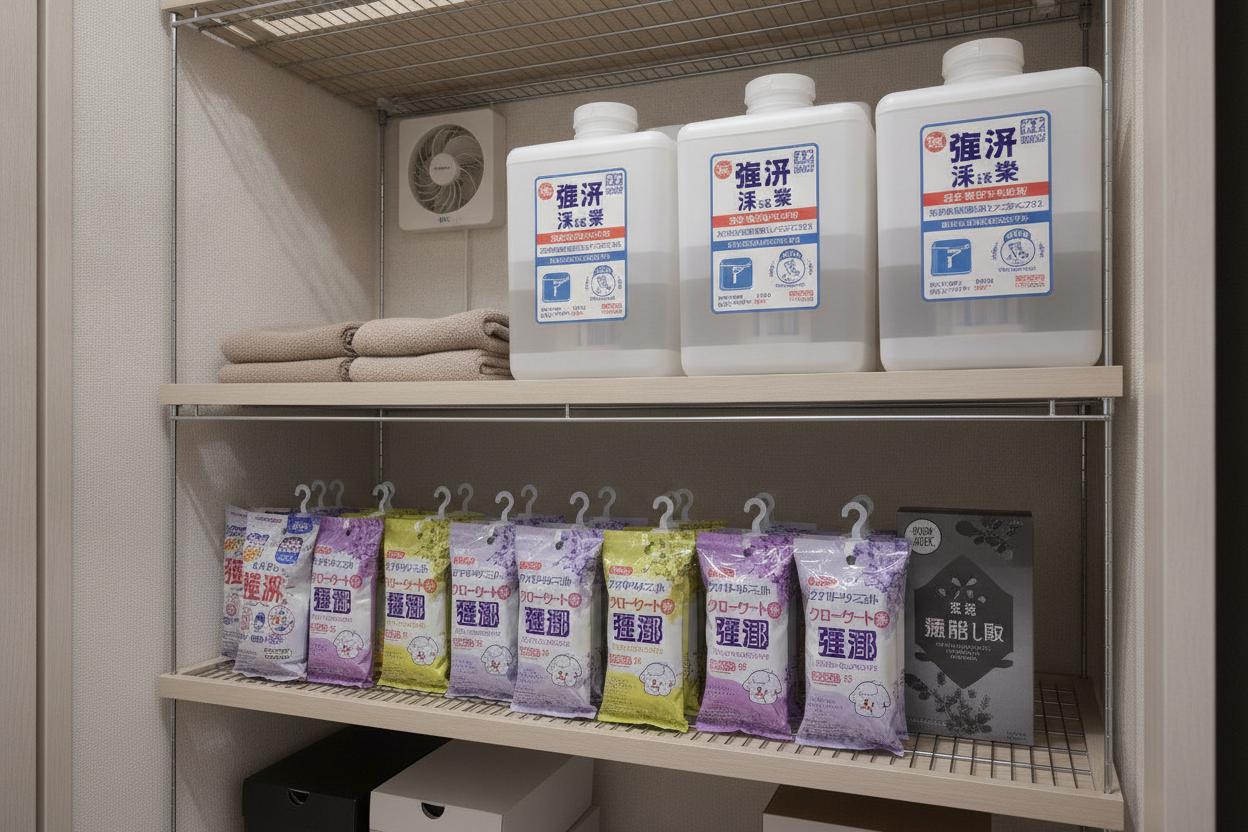
- Dehumidifier: Buy one rated for your apartment size. For a 1K, a 5–6L/day unit is enough. Cost: ¥8,000–¥20,000 at Bic Camera or Yodobashi. Run it continuously in the main room during June–September.
- Moisture absorbers: Daiso sells disposable packs for ¥100 (3-pack). You'll need 10–15 active packs at all times — closets, drawers, shoe racks, under the bed. Budget ¥1,000–¥1,500 per month.
- Bathroom fan: Run the built-in ventilation fan 24/7. Yes, it uses electricity (about ¥500/month). Yes, it's worth it. The alternative is scrubbing mold off the ceiling weekly.
- Closet ventilation: Leave closet doors slightly ajar when possible. Small battery-powered fans inside closets help.
- Shoe care: Don't store leather shoes in closed boxes. Use open racks. Wipe them down if they get wet.
When viewing apartments, look for bathrooms with windows that open — these ventilate much better than windowless unit baths. Check if the closet has a ventilation grate. Ask if the previous tenant had mold issues (agents may or may not answer honestly, but it's worth asking).
Snow Country Special: What Changes in Hokkaido and Niigata
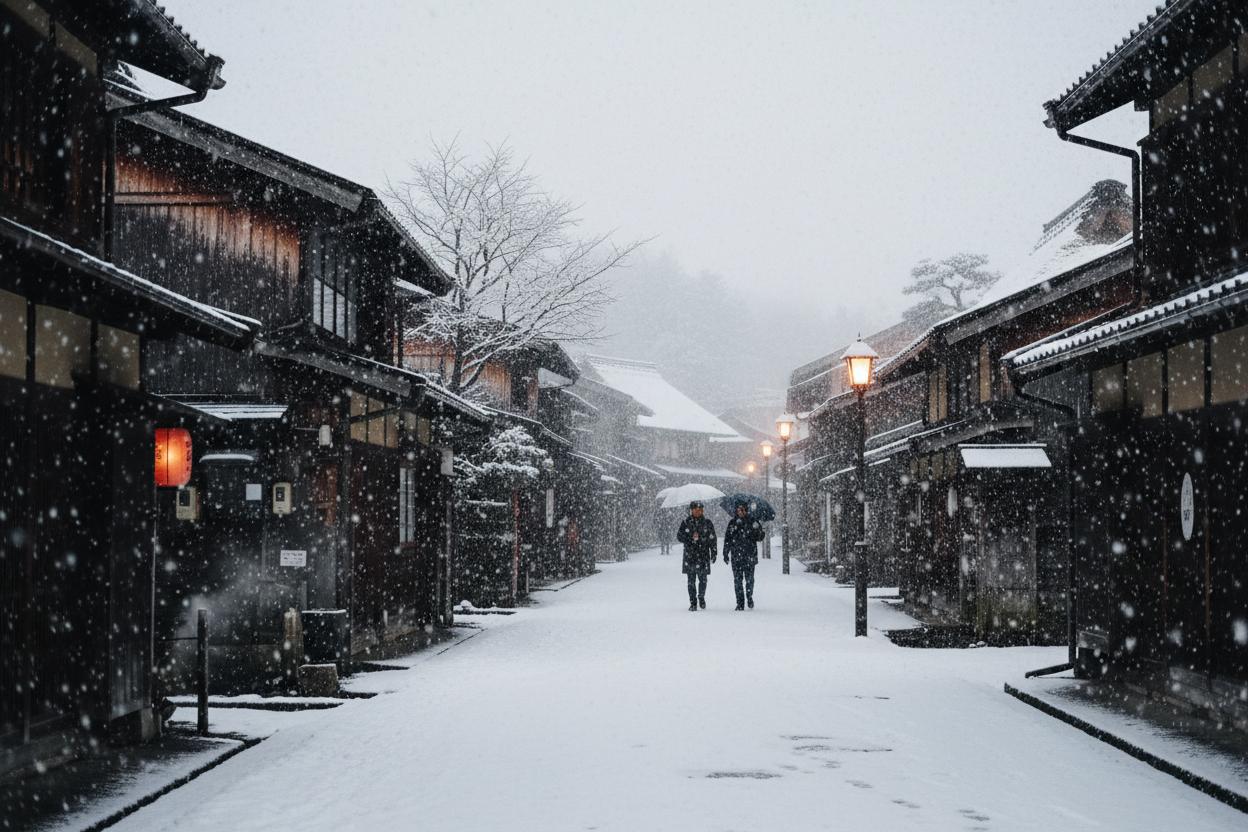
If you're looking at apartments in Hokkaido, the Sea of Japan side, or mountain towns, the climate checklist changes. Humidity and summer AC are less of a concern. Snow and heating become the primary factors.
Covered parking: In heavy snow areas, covered parking isn't a luxury — it's how you avoid digging your car out for 30 minutes every morning. Not all apartments offer it. Some have carports; some have underground parking (the best option); many have open lots where your car gets buried. Ask specifically: 駐車場は屋根ありますか? (Is the parking covered?)
Kerosene delivery: If the apartment uses kerosene heating, check where the nearest gas station is and whether they do home delivery. Some areas still have kerosene trucks that come door-to-door. This matters because hauling 20-liter tanks through snow is not fun.
Snow removal responsibility: In Sapporo, the city clears main roads and sidewalks. In smaller towns and residential areas, you're responsible for clearing the sidewalk in front of your building. Check your lease for 除雪 (snow removal) clauses. Some landlords include it; some don't.
Entrance airlock: Well-designed Hokkaido apartments have a small entry area — a genkan with a door before the main living space. This prevents cold air from rushing in every time you enter. Check for this feature; it makes a noticeable difference in comfort and heating costs.
Roof shape: In heavy snow zones, look for steeply pitched roofs. Flat roofs accumulate snow and can leak or collapse in extreme cases. Most Japanese buildings in snow country have angled roofs, but some older apartment blocks don't.
Tatami vs. Hardwood: The Humidity Factor
Japanese apartments often come with tatami mat flooring in one room — the traditional straw mats that give off a distinctive smell and feel. Here's what you need to know about tatami and climate.
Tatami breathes. In humid weather, it absorbs moisture from the air, which can make the room feel slightly less sticky. This is why it's traditional in Japan — it predates air conditioning by centuries. But this same quality means tatami molds faster than any other surface. We've seen tatami develop black spots within a single humid summer in a poorly ventilated room.
Hardwood or synthetic flooring (フローリング) is easier in humid zones. It doesn't mold. It wipes clean. The downside is that it doesn't absorb humidity, so the room feels stickier. But with a dehumidifier running, that's manageable.
Our recommendation: if you're in Tokyo, Osaka, or any Pacific-side city, prefer hardwood or synthetic flooring. If you get an apartment with tatami, budget for professional cleaning (about ¥15,000 per 6-mat room) before you move out, and run a dehumidifier in that room all summer.
Floor Level: Ground vs. Top vs. Middle
The floor you choose affects your climate experience more than you'd expect.
Ground floor (1F): Cheaper by 10–20% because Japanese people avoid it. The reasons are valid: it's more humid (moisture seeps up from the ground), there's less privacy, and security is a concern. In summer, a ground-floor apartment in Tokyo can feel like a basement — damp, cool but clammy, prone to mold. The only exception is in well-built modern buildings with proper moisture barriers.
Top floor: Hottest in summer. Heat rises, Japanese roofs are often uninsulated, and you're directly under the sun. Your AC works harder. But — no upstairs neighbor noise, which in Japan is a genuine quality-of-life factor. Japanese buildings have thin floors, and footsteps from above are loud.
Third floor (3F): The sweet spot. High enough to avoid ground moisture and most street noise. Low enough to avoid the worst rooftop heat. In buildings without elevators — which describes most Japanese apartment buildings under 5 stories — 3F is still walkable. Above 4F, hauling groceries and laundry gets annoying fast.
The Viewing Checklist: What to Bring, What to Ask
When you visit an apartment, most people check the obvious: room size, closet space, distance from the station. Here's the climate-specific checklist we wish we'd used from the start.
Bring:
- A compass app on your phone. Check which way the balcony faces. Verify it matches the listing.
- A tissue. Hold it near the window frames. If it flutters, there's a draft. In winter, that draft is your heating bill.
Check:
- Window type. Single pane = bad insulation. Double pane = good. Touch the glass in summer — if it feels hot, that's solar heat gain you'll be fighting.
- AC age. Look at the manufacture date on the unit. Older than 10 years = inefficient and possibly noisy.
- Bathroom ventilation. Is there a window? A fan? Both?
- Closet condition. Any mold smell? Black spots on the ceiling? Damp feel?
- Building exterior. Cracks? Stains that look like water damage? These suggest leaks and humidity issues.
Ask the agent:
- 建築年は? (What year was it built?) — Anything before 2015, assume poor insulation.
- 断熱はありますか? (Is there insulation?) — They might not know, but the question signals you're informed.
- 前の住民の電気代は? (What was the previous tenant's electricity bill?) — Agents rarely have this info, but it doesn't hurt to ask.
- エアコンの設置は追加できますか? (Can I add an AC unit?) — Important if there's only one unit in a multi-room apartment.
Final Advice: Sign for the Climate You'll Actually Live In
Most people view apartments in comfortable weather — spring or autumn, when everything feels manageable. The problem is, you'll be living there in August and January too. Imagine this apartment at 33°C and 80% humidity. Imagine it at 2°C outside with no central heating. Does it still work?
We made this mistake. Our second Tokyo apartment had a gorgeous view, a great location, and a north-facing bedroom that turned into a sauna in summer. We lasted one year and paid the moving costs to escape. Don't be us. Check the climate factors before you sign.
Next, read about what your first year actually feels like in each climate zone, or review the utility cost breakdowns for your target city.